Corten Steel: An Essential Guide to Weathering Steel, Applications, Benefits & Buying
September 8, 2026
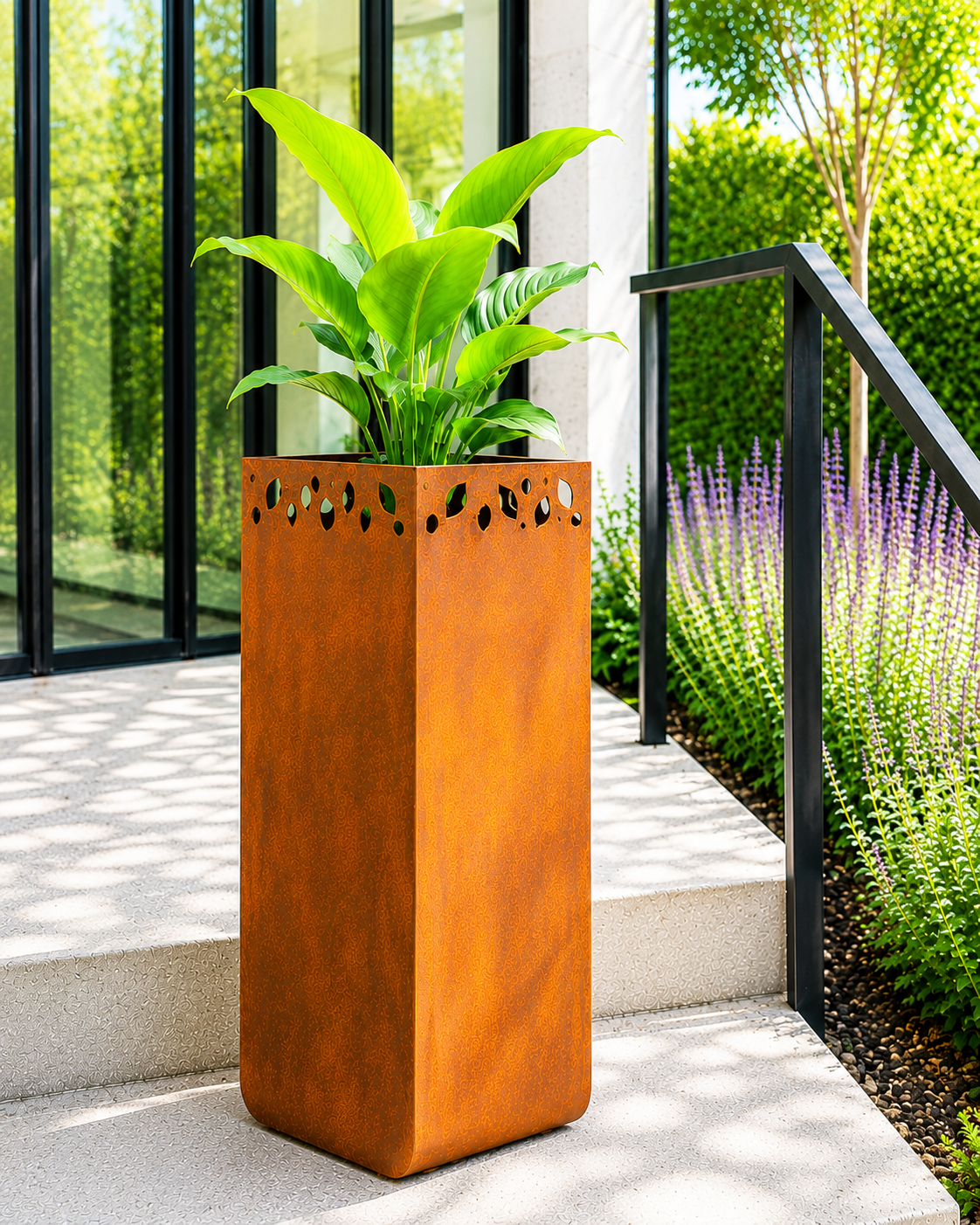
A complete guide to Corten weathering steel, including protective patina formation, grades, benefits, applications, fabrication, installation, maintenance and buying considerations.
Corten steel has become a defining material in modern architecture, landscape design, infrastructure, and premium outdoor products. Recognised for its distinctive rust-like appearance and exceptional atmospheric corrosion resistance, this weathering steel combines engineering performance with a naturally evolving aesthetic.
Unlike conventional carbon steel, Corten steel develops a stable protective oxide layer, commonly called a patina, when exposed to alternating wet and dry conditions. This patina slows further atmospheric corrosion, allowing the material to withstand outdoor exposure with significantly less maintenance in suitable environments.
Today, Corten steel is used for architectural façades, bridges, sculptures, landscape edging, raised garden beds, planters, privacy screens, garden arches, fire pits, outdoor furniture, and custom fabricated products.
Its warm bronze, rust-red, and brown tones complement timber, stone, concrete, glass, and vegetation. For architects, landscape designers, manufacturers, wholesalers, retailers, and OEM buyers, however, aesthetics are only part of the equation. Grade selection, environmental exposure, thickness, fabrication, drainage, installation, and lifecycle cost all influence performance.
This guide explains what Corten steel is, how weathering works, its benefits and applications, major grades, fabrication considerations, buying factors, maintenance requirements, and OEM manufacturing opportunities.
What Is Corten Steel?
Corten steel is a high-strength, low-alloy weathering steel designed to develop a stable protective oxide layer when exposed to atmospheric conditions.
Ordinary carbon steel forms rust that can remain porous and progressively expose fresh metal to moisture and oxygen. Weathering steel behaves differently. Its controlled alloy composition encourages the formation of a dense, tightly bonded patina that slows further corrosion.
The result is a material that can provide long-term outdoor durability without relying on conventional paint systems in many appropriate applications.
Corten steel is therefore valued for two characteristics that are rarely combined in one material: structural performance and natural visual character.
Why Is It Called Weathering Steel?
Weathering steel gets its name from its ability to develop improved atmospheric corrosion resistance through controlled exposure to weather.
Elements such as copper, chromium, nickel, and phosphorus contribute to the formation of a compact oxide layer during repeated wet and dry cycles. Rather than completely preventing oxidation, the material uses controlled oxidation as part of its protection mechanism.
This makes weathering steel particularly attractive for exposed structures and landscape products where reduced maintenance is important.
The History of COR-TEN Steel
Weathering steel was developed in the United States during the 1930s, initially for applications such as railway freight cars where durability and reduced maintenance were important.
The original COR-TEN name reflected two primary characteristics:
- COR - corrosion resistance
- TEN - tensile strength
Over time, weathering steel expanded into bridges, buildings, transmission structures, industrial equipment, architecture, sculpture, and landscape design.
Although COR-TEN is a trademarked designation, "Corten steel" is now commonly used as a general term for weathering steel products.
Corten Steel vs Mild Steel
The most important difference between Corten steel and mild steel is how each material responds to atmospheric exposure.
| Property | Corten Steel | Mild Steel |
|
Corrosion resistance |
High in suitable environments |
Low without protection |
|
Surface protection |
Self-forming patina |
Paint/coating normally required |
|
Maintenance |
Low in suitable applications |
Higher |
|
Outdoor durability |
Excellent |
Dependent on coating |
|
Appearance |
Natural weathered finish |
Conventional metal finish |
|
Lifecycle cost |
Potentially lower |
Higher where regular coating is required |
Corten steel is not completely corrosion-proof. Its performance depends on appropriate environmental conditions and good design.
How Corten Steel Works
Corten steel works by turning surface oxidation into a protective barrier.
When the steel is exposed to rain, humidity, oxygen, and drying cycles, its alloying elements contribute to the formation of a tightly adherent oxide layer. Unlike loose rust, this patina restricts the movement of moisture and oxygen toward the underlying steel.
The Science Behind the Protective Patina
The patina is the defining characteristic of weathering steel.
Repeated wet and dry cycles gradually transform the surface from its original mill finish into a more stable oxide layer. The appearance changes as the patina develops, while the corrosion rate generally decreases once the protective layer becomes established.
This is why Corten steel is particularly effective in outdoor environments where the material can periodically dry.
The Weathering Process
Stage 1 - Fresh Steel
New Corten steel generally has a dark grey or mill-finish appearance similar to other hot-rolled steel products.
Stage 2 - Initial Weathering
After exposure to moisture and oxygen, oxidation begins. The surface may develop orange and reddish tones.
Stage 3 - Patina Formation
Repeated wet and dry cycles gradually transform the initial oxidation into a denser reddish-brown surface.
Stage 4 - Mature Surface
Over time, the patina generally becomes darker and richer, producing the characteristic bronze, rust-red, and brown appearance associated with weathering steel.
The exact speed and colour vary according to climate, rainfall, humidity, air quality, orientation, and exposure.
Environmental Conditions That Affect Patina Formation
Corten steel performs best when the surface experiences natural cycles of wetting and drying.
Favourable conditions generally include:
- Good drainage
- Adequate air circulation
- Alternating wet and dry periods
- Limited exposure to persistent standing water
- Suitable atmospheric conditions
Continuously damp environments, locations with heavy salt exposure, and areas where water becomes trapped against the steel require additional consideration.
Expert Insight: Drainage is one of the most important design considerations when working with Corten steel. Water should be able to drain freely rather than remain trapped against the material.
Chemical Composition and Material Properties of Corten Steel
The performance of Corten steel comes from its carefully controlled alloy composition.
Compared with conventional carbon steel, weathering steel contains controlled amounts of alloying elements that influence atmospheric corrosion resistance, strength, toughness, and fabrication behaviour.
Typical Alloying Elements
| Element | Primary Function |
|
Copper |
Supports atmospheric corrosion resistance and patina formation |
|
Chromium |
Improves corrosion resistance |
|
Nickel |
Supports toughness and weather resistance |
|
Phosphorus |
Contributes to patina development in applicable grades |
|
Silicon |
Supports strength and oxidation resistance |
|
Manganese |
Improves mechanical properties |
|
Carbon |
Contributes to strength when controlled |
|
Iron |
Primary base of the alloy |
Exact chemical composition varies by grade and applicable standard.
Mechanical Properties
Corten steel is valued not simply because it looks different, but because it can provide strong mechanical performance.
High Strength
Its strength makes weathering steel suitable for structural and fabricated applications where durability is important.
Applications include:
- Bridges
- Building façades
- Structural components
- Outdoor furniture
- Garden products
- Landscape structures
Toughness and Fatigue Resistance
Outdoor structures can experience repeated stresses caused by wind, temperature changes, loads, and everyday use. Appropriate weathering steel grades can provide the toughness required for demanding applications.
Corrosion Resistance
Corten steel's principal advantage is its resistance to atmospheric corrosion under suitable conditions.
The protective patina reduces the rate of further corrosion, potentially lowering maintenance requirements compared with painted carbon steel.
However, proper detailing remains essential. Standing water, persistent moisture, heavy marine exposure, and poorly designed joints can negatively affect weathering performance.
Weldability and Fabrication
Weathering steel can be processed using modern manufacturing methods when appropriate procedures and consumables are selected.
Common fabrication processes include:
- Laser cutting
- CNC punching
- Press braking
- Rolling
- MIG welding
- TIG welding
- Robotic welding
- Grinding and finishing
This makes Corten steel suitable for both large architectural structures and precision-engineered garden products.
Sustainability
Corten steel offers several sustainability advantages:
- Long service life
- Reduced need for repeated painting in suitable applications
- Lower maintenance material consumption
- Full recyclability
- Reduced replacement frequency
Its environmental value is strongest when the material is correctly specified and designed for a long service life.
Benefits of Corten Steel
Corten steel combines durability, low maintenance, structural strength, design flexibility, and distinctive aesthetics.
Exceptional Durability
The protective patina allows weathering steel to withstand atmospheric exposure for extended periods in appropriate environments.
It is commonly used for:
- Architectural façades
- Raised garden beds
- Planters
- Landscape structures
- Bridges
- Sculptures
- Outdoor furniture
Low Maintenance
Once the patina has matured, many Corten steel products require relatively little maintenance.
Depending on the application, there may be no need for regular:
- Painting
- Recoating
- Rust removal
- Protective surface treatments
Periodic inspection and cleaning remain advisable.
Distinctive Appearance
Corten steel develops an appearance that conventional painted steel cannot easily replicate.
The surface can transition through:
- Orange
- Rust red
- Burnt sienna
- Bronze
- Dark brown
The resulting finish works particularly well with natural materials and vegetation.
Design Flexibility
Corten steel can be laser cut, bent, rolled, perforated, and welded into highly customised forms.
This enables manufacturers to produce:
- Decorative screens
- Planters
- Garden arches
- Trellises
- Raised beds
- Sculptures
- Landscape edging
- Architectural panels
Lower Lifecycle Costs
Corten steel may cost more initially than basic mild steel, but lifecycle economics can favour weathering steel where reduced painting, maintenance, and replacement requirements offset the initial premium.
Key Benefits at a Glance
| Benefit | Practical Value |
|
Protective patina |
Reduces atmospheric corrosion |
|
Low maintenance |
Reduces ongoing coating requirements |
|
High strength |
Suitable for demanding applications |
|
Natural appearance |
Adds architectural and landscape character |
|
Fabrication flexibility |
Supports custom designs |
|
Long service life |
Reduces replacement frequency |
|
Recyclability |
Supports circular material use |
Types of Corten Steel
Weathering steel is available in different grades and specifications. The correct choice depends on structural requirements, applicable standards, environmental conditions, and fabrication requirements.
Commonly referenced specifications include Corten A, Corten B, ASTM A588, ASTM A242, and EN 10025 S355J2W.
Corten A
Corten A is commonly associated with architectural and decorative applications where appearance and atmospheric corrosion resistance are important.
Typical applications include:
- Architectural cladding
- Decorative panels
- Planters
- Privacy screens
- Landscape features
- Fire pits
Corten B
Corten B is generally associated with applications requiring greater structural performance.
Typical uses include:
- Bridges
- Structural components
- Railway infrastructure
- Industrial structures
ASTM A588
ASTM A588 is a widely recognised weathering steel specification used for structural applications, particularly in North American markets.
Applications include:
- Bridges
- Structural members
- Transmission towers
- Industrial platforms
ASTM A242
ASTM A242 weathering steel is used in architectural, structural, and fabricated outdoor applications where atmospheric corrosion resistance is required.
EN 10025 S355J2W
S355J2W is a European weathering steel grade used in structural and architectural applications where strength and improved atmospheric corrosion resistance are required.
Important: Grade equivalence should not be assumed simply because two materials are marketed as "Corten." Buyers should verify the applicable material standard, chemistry, mechanical properties, and certifications.
Raw vs Pre-Weathered Corten Steel
| Feature | Raw Corten Steel | Pre-Weathered Corten Steel |
|
Appearance |
Mill finish |
Patina already initiated |
|
Patina development |
Occurs after installation |
Partially developed before delivery |
|
Initial appearance |
Less uniform |
More consistent |
|
Early runoff |
Potentially higher |
Can be reduced |
|
Typical use |
General fabrication |
Premium architectural/landscape projects |
Applications of Corten Steel
Corten steel is used across architecture, landscaping, infrastructure, industrial manufacturing, and outdoor living.
Architectural Cladding and Building Façades
Corten steel cladding creates façades that evolve naturally with age.
It is commonly used for:
- Commercial buildings
- Hotels
- Museums
- Cultural centres
- Educational campuses
- Residential developments
- Retail projects
Its weathered appearance complements glass, concrete, timber, stone, and landscaping.
Good drainage, ventilation, flashing, and joint detailing are essential to minimise unwanted staining and moisture retention.
Residential Architecture
Residential applications include:
- Feature walls
- Entrance gates
- Balcony screens
- Pergolas
- Garden retaining walls
- Landscape edging
- Outdoor kitchens
Its earthy appearance integrates particularly well with contemporary gardens.
Commercial Buildings
Commercial projects use Corten steel to create a distinctive architectural identity while potentially reducing long-term maintenance.
Applications include offices, restaurants, hotels, shopping centres, business parks, and public buildings.
Landscape Architecture
Weathering steel has become a popular landscape material because its warm tones contrast naturally with greenery.
Landscape applications include:
- Retaining walls
- Garden edging
- Raised planting beds
- Water features
- Seating
- Decorative screens
- Sculptural installations
Raised Garden Beds
Corten steel raised garden beds offer a durable alternative to materials that can deteriorate outdoors. Benefits include:
- Long service life
- Structural rigidity
- Low maintenance
- Contemporary appearance
- Resistance to normal outdoor exposure
They are suitable for vegetables, herbs, flowers, and ornamental planting.
Garden Planters
Corten steel planters are widely used in residential, hospitality, commercial, and public landscapes.
Manufacturers can produce custom dimensions, shapes, profiles, and laser-cut details to meet project requirements.
Garden Edging
Corten steel edging creates clean boundaries between lawns, planting beds, pathways, gravel, and paving.
It can be fabricated in straight or curved configurations and requires relatively little maintenance.
Privacy Screens and Decorative Panels
Laser-cut Corten steel screens provide both privacy and visual interest.
Applications include:
- Garden screens
- Courtyard dividers
- Balcony panels
- Decorative fencing
- Feature walls
- Outdoor art
Patterns can range from geometric designs to botanical motifs and custom logos.
Garden Arches, Trellises, and Plant Supports
Weathering steel can be fabricated into:
- Rose arches
- Obelisks
- Trellises
- Pergolas
- Tuteurs
- Plant supports
These structures provide durable support for climbing plants while developing a natural patina.
Fire Pits and Outdoor Living
Corten steel is increasingly used for:
- Fire pits
- Outdoor fireplaces
- Barbecue surrounds
- Wood storage
- Outdoor kitchens
- Seating features
Its weathered appearance complements outdoor environments and natural materials.
Bridges and Infrastructure
Weathering steel has a long history in infrastructure.
Applications include:
- Highway bridges
- Pedestrian bridges
- Railway structures
- Structural supports
- Transmission towers
- Industrial platforms
Its use can reduce coating and maintenance requirements where environmental conditions are appropriate.
Public Art and Sculptures
Artists use Corten steel for sculptures and public installations because its large-format fabrication capability, strength, and evolving colour create visual depth.
Industrial Manufacturing
Industrial applications can include equipment, enclosures, platforms, structural components, and other outdoor products where strength and atmospheric corrosion resistance are required.
Corten Steel vs Stainless Steel vs Mild Steel
Material selection should consider corrosion resistance, appearance, maintenance, cost, fabrication, and environment.
Material Comparison
| Feature | Corten Steel | Stainless Steel | Mild Steel |
|
Corrosion resistance |
High in suitable environments |
Excellent |
Low without protection |
|
Coating required |
Usually not for suitable applications |
No |
Usually yes outdoors |
|
Maintenance |
Low |
Low |
Higher |
|
Appearance |
Weathered patina |
Metallic |
Painted/coated |
|
Strength |
High |
High |
Moderate to high depending on grade |
|
Cost |
Moderate to high |
High |
Low |
|
Outdoor performance |
Excellent in suitable environments |
Excellent |
Coating dependent |
Which Material Should You Choose?
Choose Corten steel when you want:
- Natural weathered aesthetics
- Low maintenance
- Landscape integration
- Long service life
- Architectural character
Choose stainless steel when you need:
- High corrosion resistance
- A bright or brushed metallic appearance
- Hygienic surfaces
- Strong performance in demanding environments
Choose mild steel when you need:
- Lower initial material cost
- Painted or coated products
- Indoor applications
- Conventional fabrication
Corten Steel Buying Guide
Choosing Corten steel involves more than selecting a sheet thickness.
Before purchasing, evaluate the application, environmental exposure, material grade, thickness, fabrication method, drainage requirements, and supplier capabilities.
Questions to Ask Before Buying
Ask:
- What is the intended application?
- Is the product structural or decorative?
- What environmental conditions will it face?
- Which grade is appropriate?
- What thickness is required?
- Does the product require bending or laser cutting?
- How will water drain from the product?
- Will the steel be raw or pre-weathered?
- Does the supplier have experience with weathering steel?
Choosing an OEM Manufacturing Partner
For wholesalers, retailers, distributors, and private-label brands, supplier capability can significantly influence product quality.
Look for manufacturers offering:
- In-house laser cutting
- CNC bending and forming
- Precision welding
- Product engineering
- Prototyping
- Quality control
- Export experience
- Custom packaging
- Scalable production
Buyer Checklist
Before placing an order, confirm:
- Correct weathering steel grade
- Material thickness
- Product dimensions
- Fabrication tolerances
- Welding specifications
- Surface finish
- Drainage provisions
- Packaging requirements
- Export documentation
- Delivery schedule
- Quality assurance requirements
OEM & Private Label Manufacturing
OEM and private-label manufacturing allow retailers, wholesalers, distributors, and brands to develop Corten steel products without establishing their own manufacturing infrastructure.
What Is OEM Manufacturing?
OEM manufacturing involves producing products according to a customer's design, specifications, dimensions, or branding requirements.
Services may include:
- CAD support
- Product engineering
- Material selection
- Prototyping
- Laser cutting
- CNC forming
- Welding
- Surface finishing
- Inspection
- Export packaging
What Is Private Label Manufacturing?
Private-label manufacturing allows a business to sell professionally manufactured products under its own brand.
Customisation can include:
- Product dimensions
- Branding
- Packaging
- Labels
- Barcodes
- Manuals
- Product documentation
Customisation Options
Product Dimensions
Manufacturers can produce custom heights, widths, depths, and configurations.
Material Thickness
Thickness should be selected according to product dimensions, loads, fabrication requirements, and intended use.
Laser-Cut Designs
Laser cutting enables:
- Botanical patterns
- Geometric designs
- Logos
- Decorative artwork
- Custom branding
Surface Finish
Depending on the product, options may include:
- Raw mill finish
- Naturally weathering finish
- Pre-weathered finish
- Stabilised patina
Quality Control in Manufacturing
Professional Corten steel manufacturing should include inspection of:
- Raw materials
- Material thickness
- Cutting accuracy
- Weld quality
- Dimensions
- Surface finish
- Structural integrity
- Packaging
Consistent quality control is especially important for OEM programmes involving repeated production runs.
Why Choose Prestamp Engineers?
Prestamp Engineers combines engineering expertise with modern metal fabrication capabilities to manufacture Corten steel and other premium outdoor products for international customers.
Our capabilities include:
- OEM manufacturing
- Private-label manufacturing
- Precision laser cutting
- CNC bending and forming
- Robotic and manual welding
- Prototype development
- Custom product engineering
- Export-ready packaging
- International shipping support
We work with architects, landscape designers, wholesalers, retailers, distributors, and global brands to develop products according to specific dimensions, designs, and production requirements.
Installation Guide
Correct installation is essential for achieving consistent weathering and long-term durability.
Best Practices for Installation
Plan for:
- Adequate drainage
- Good ventilation
- Stable foundations
- Appropriate fasteners
- Proper structural support
- Suitable expansion allowances
- Protection of adjacent materials from early runoff
Installation Checklist
Before installation, verify:
- Material grade
- Structural adequacy
- Product dimensions
- Drainage
- Fastener compatibility
- Installation tolerances
- Safe handling procedures
Maintenance Guide
Corten steel is generally low maintenance once its patina has stabilised.
Routine Maintenance
Recommended practices include:
- Periodic visual inspections
- Removing accumulated debris
- Keeping drainage channels clear
- Inspecting welds and fasteners
- Checking areas where water may collect
What to Avoid
Avoid:
- Persistent standing water
- Poor drainage
- Trapped organic material
- Aggressive chemical cleaners
- Unnecessary abrasive treatment
These precautions help preserve both the patina and the underlying material.
Common Mistakes to Avoid
Choosing the Wrong Grade
Not every weathering steel grade is appropriate for every application. Match the grade to the structural, environmental, and fabrication requirements.
Ignoring Drainage
Water retention can interfere with normal weathering and accelerate corrosion in vulnerable areas.
Expecting an Instant Finish
Corten steel develops its appearance gradually. Colour and patina will change during the first months and potentially years of exposure.
Using It in Unsuitable Environments
Persistent moisture, heavy marine salt exposure, and continuous water contact require careful engineering assessment.
Selecting a Manufacturer Based Only on Price
The cheapest quotation may not provide the best lifecycle value. Material quality, fabrication accuracy, welding, tolerances, packaging, and quality control all affect the finished product.
Expert Insights
The success of Corten steel depends on more than the material itself. The best results come from combining correct material specification with thoughtful engineering and installation.
Successful projects typically include:
- Appropriate grade selection
- Correct material thickness
- Quality fabrication
- Good drainage
- Proper detailing
- Skilled installation
- Realistic expectations regarding patina development
When these factors are addressed, Corten steel can deliver an effective combination of durability, low maintenance, structural performance, and visual character.
Frequently Asked Questions (FAQs)
1. Is Corten steel stronger than mild steel?
Many weathering steel grades offer higher mechanical strength than common mild steel grades, while also providing improved atmospheric corrosion resistance. The exact strength depends on the selected grade.
2. Does Corten steel require painting?
In many suitable outdoor applications, Corten steel does not require conventional painting because its protective patina provides atmospheric corrosion resistance.
3. How long does Corten steel take to develop a patina?
Initial weathering can begin within weeks, while a more mature protective patina may develop over several months or longer depending on climate, moisture, drying cycles, and exposure.
4. Can Corten steel be welded?
Yes. Corten steel can be welded using suitable procedures, compatible consumables, and appropriate fabrication practices.
5. Is Corten steel suitable for coastal areas?
It can be used in some coastal applications, but heavy salt exposure and persistent marine conditions require careful assessment because they can interfere with normal patina development.
6. Is Corten steel environmentally friendly?
Its durability, reduced maintenance requirements in suitable applications, long service life, and recyclability make it an attractive material for many sustainability-focused projects.
7. Does Corten steel stain surrounding surfaces?
During the early weathering stage, rust-coloured runoff can stain adjacent concrete, stone, paving, or other surfaces. Drainage and detailing should therefore be considered carefully.
8. Can Corten steel be used for garden products?
Yes. It is widely used for raised garden beds, planters, edging, trellises, arches, screens, fire pits, and other outdoor products.
9. What thickness should I choose?
The correct thickness depends on the product's dimensions, structural loads, intended application, fabrication process, and service requirements. A qualified manufacturer should recommend the appropriate specification.
10. Can Corten steel products be custom manufactured?
Yes. Corten steel can be laser cut, bent, rolled, welded, perforated, and fabricated into custom products. OEM and private-label manufacturing can also include custom dimensions, patterns, packaging, and branding.
Conclusion
Corten steel has evolved from a specialised engineering material into one of the most recognisable materials in contemporary architecture, landscape design, infrastructure, and outdoor product manufacturing.
Its defining advantage is the ability to develop a stable protective patina that slows atmospheric corrosion while creating a distinctive natural appearance. Combined with high strength, fabrication flexibility, recyclability, and relatively low maintenance in suitable environments, weathering steel provides an attractive alternative to conventional painted steel for many exterior applications.
Whether you are specifying architectural cladding, designing landscape features, developing premium garden products, or sourcing OEM solutions, the most important considerations are grade selection, environmental exposure, thickness, fabrication quality, drainage, installation, and supplier expertise.
With appropriate design and manufacturing, Corten steel can provide long-term performance while developing a richer appearance as it ages.
- The Prestamp Engineers Team
September 8, 2026