Metal Plant Stands: Materials, Sizes & Buying Guide
October 4, 2026
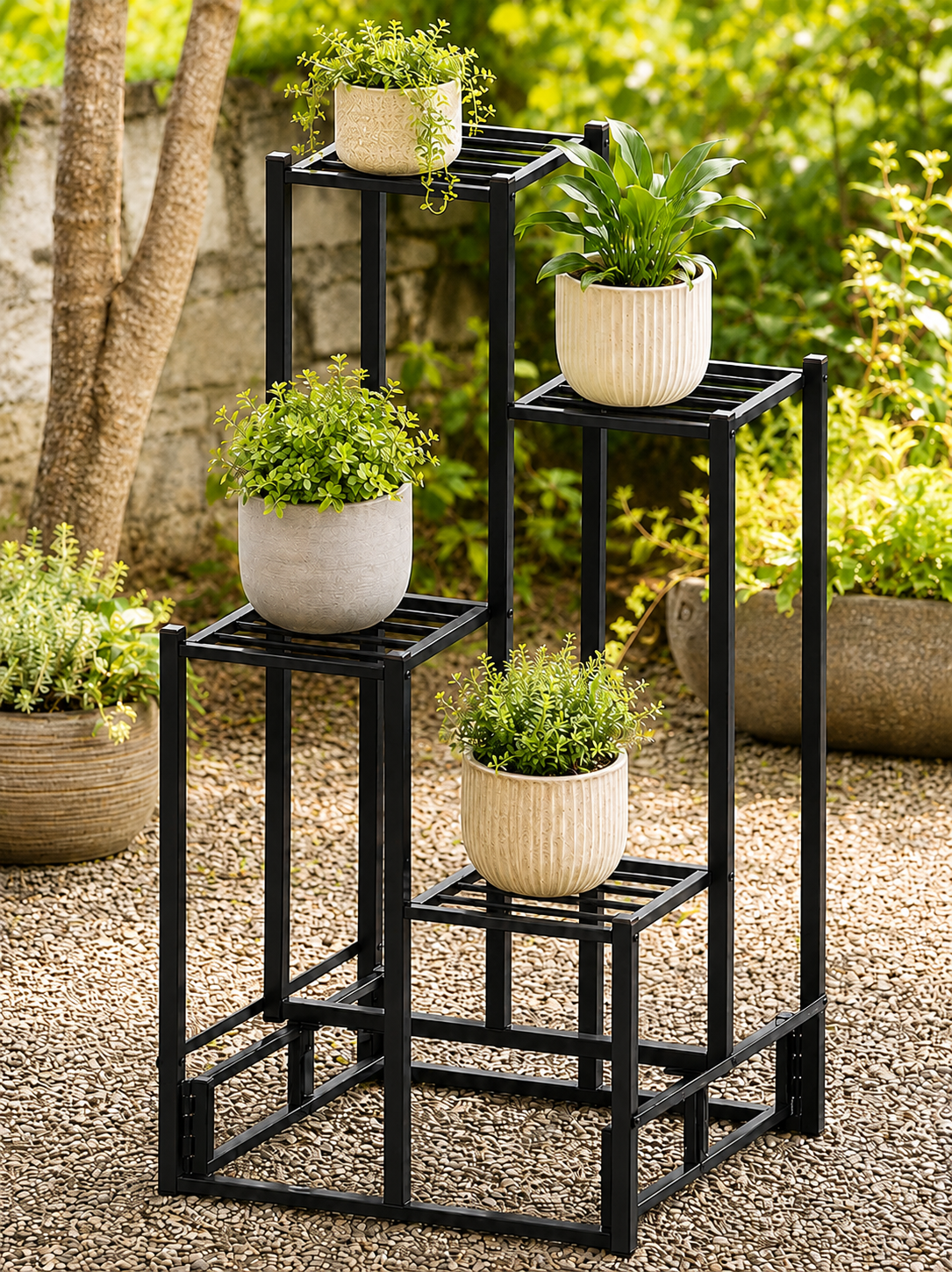
Compare wrought iron, steel, cast iron and aluminum plant stands. Learn weight limits, rust protection, ideal heights and how to order custom sizes.
Metal Plant Stands: How to Choose One That Holds Up Indoors and Out
A plant stand looks like the simplest object in the house until it fails. A thin coating chips and the base rusts onto your patio tiles. A tall, narrow frame wobbles the first time someone brushes past it with a full watering can. A shelf that looked sturdy online bends under a glazed ceramic pot and a fully watered fern.
Metal plant stands avoid most of these problems, but only when the metal, the finish and the design match the job. This guide covers how to make that match: which metals suit which locations, how to keep a stand from rusting, how many tiers and how much height you actually need, what weight a stand can safely carry, and what to specify if you want a custom plant stand made to your dimensions.
What Is a Metal Plant Stand?
A metal plant stand is a freestanding or mounted support, made from iron, steel, aluminum or a similar metal, that lifts a potted plant off the floor or ground. Designs range from a single round ring on short legs to multi-level racks that hold a dozen pots.
The stand raises the pot for several practical reasons. It puts foliage closer to natural light, improves airflow around the container, keeps terracotta from sitting in standing water, and protects floors and decks from moisture marks. It also changes how a room looks, which is why the same product turns up in living rooms, hallways, patios and shopfronts.
You will see the same product sold as a plant holder, flower pot stand, planter stand, plant rack or plant display stand. The terms overlap heavily. In general, "stand" and "holder" describe a single-pot support, while "rack" and "shelf" suggest multiple levels or positions.
Why Choose Metal Over Wood, Plastic or Resin?
Metal's main advantage is strength relative to bulk. A steel frame can carry a heavy planter on slim legs, which is how you get an open, airy design that wood would need much thicker members to match. That matters in small rooms and on narrow balconies where visual weight counts as much as physical space.
Metal is the right choice when you need load capacity, a slim profile or long outdoor life. If your priority is a very warm, natural look in a dry indoor space, wood may suit better, and many people combine the two.
Metal Types Compared
The word "metal" covers materials that behave very differently. The table gives the quick view, and the sections after it explain the reasoning.
| Material | Rust behavior | Weight | Best for | Main drawback |
|---|---|---|---|---|
| Wrought iron / mild steel | Rusts unless coated | Medium to heavy | Decorative stands, scrollwork, indoor and covered outdoor use | Needs a sound finish and touch-ups |
| Cast iron | Rusts unless coated | Very heavy | Stable pedestals, traditional or antique styling | Heavy, can crack if dropped |
| Galvanized steel | Zinc coating resists rust | Medium | Outdoor racks, patios, wet locations | Limited look unless also painted |
| Stainless steel | Highly resistant | Medium | Coastal, humid or hygiene-sensitive spaces | Higher cost |
| Aluminum | Does not rust | Light | Balconies, rooftops, frequently moved stands | Lower stiffness for the same thickness |
| Brass / bronze | Develops a patina | Medium to heavy | Decorative indoor pieces | Cost, and patina is not for everyone |
Wrought iron and mild steel
A wrought iron plant stand is the classic decorative option, with scrolls, rings and curved legs. A note on terminology: traditional wrought iron is rarely produced today, and most products sold under that name are made from mild steel worked into the same shapes. That is not a problem in itself. What matters is how the steel is finished and how well the joints are welded, so ask about those rather than the name.
Mild steel offers excellent strength for the price and is easy to bend, weld and shape, which is why it dominates both decorative and custom work. Without a good coating, though, it will rust.
Cast iron
A cast iron plant stand is poured into a mold rather than bent from bar or tube. The result is very heavy and very stable, with detailed ornamental patterns that are hard to achieve any other way. Cast iron is a sound choice for a pedestal that should never move, such as a statement planter at an entrance.
Its weight is also its limitation. You will not want to rearrange it, and it is brittle compared with steel, so a hard knock or a drop onto stone can crack it.
Galvanized steel
Galvanized plant stands are steel coated with zinc. The zinc corrodes in preference to the steel underneath, so the base metal stays protected even where the surface is scratched. Hot-dip galvanizing gives a thicker, more durable layer than thin electroplated zinc, which is worth confirming before you buy for an outdoor location.
Galvanized steel is a strong default for patios, garden beds and anywhere rain reaches the stand. Its plain gray finish suits utilitarian or industrial looks, and it can be powder-coated on top for color.
Stainless steel
Stainless steel contains enough chromium to form a self-repairing protective surface layer, which is why it resists corrosion so well. It is a good fit for coastal homes, humid conservatories and any place where salt air or constant moisture would defeat a standard coating. It costs more, and that premium is only worth paying where conditions are demanding.
Aluminum
An aluminum plant rack will not rust, since aluminum forms a thin oxide layer that stops further corrosion, and it is light enough to carry up a flight of stairs. That makes it popular for balconies, rooftops and anywhere you rotate plants through the seasons.
The compromise is stiffness. For the same section size, aluminum is more flexible than steel, so heavy planters call for thicker tube or extra bracing. (Outside the US you will see the spelling "aluminium"; it is the same metal.) Anodized finishes add extra surface hardness and corrosion resistance.
How to Stop a Metal Plant Stand Rusting
Rust forms when bare iron or steel meets oxygen and moisture. Preventing it means keeping that contact from ever happening, and a plant stand is a hard environment for that, because it sits in the spray zone of every watering.
What actually protects the metal
- Hot-dip galvanizing. Zinc bonded to the steel protects even where the surface is scratched. Best for outdoor stands.
- Powder coating. A baked-on polymer layer, usually applied over cleaned and pretreated steel. It is harder and more chip-resistant than ordinary spray paint, and it comes in many colors, including matte black.
- Galvanizing plus powder coating. Often called a duplex system. It is the strongest protection for harsh conditions, because each layer backs up the other.
- Painted finishes. A painted metal plant stand is fine for dry indoor locations, but ordinary paint is thinner than powder coat and will chip sooner. Expect to touch it up.
- Antique and patina finishes. These suit vintage and rustic looks, but they are decorative first. Check whether a sealant sits on top.
Steps that extend the life of any stand
- Use a drip tray or saucer so water does not run down the legs and pool at the feet, which is where most rust starts.
- Lift the feet off wet surfaces. Rubber or plastic caps stop the leg ends sitting in puddles, and they protect floors.
- Touch up chips immediately. A scratch through the coating is a doorway for moisture. Clean it, dry it and cover it with a rust-inhibiting paint matched to the finish.
- Wipe down after watering if a stand is indoors and sits near a window with condensation.
- Move stands under cover during long wet spells or winter if the finish is only paint.
- Inspect the welds. Joints are the weak points of a coating, because heat during welding can burn the finish. A quality stand has clean, sealed joints.
In coastal areas, salt in the air accelerates corrosion on ordinary steel. Stainless steel, aluminum or a duplex-coated stand is a safer choice there than a single paint layer.
Choosing a Design: Styles and Layouts
Once the material is settled, the shape comes down to where the stand goes and what it must hold.
Single-pot stands and pedestals
A pedestal plant stand raises one statement plant, such as a fiddle-leaf fig or a flowering container, to a visible height. Round-top designs on slim legs suit ceramic pots, while tripod stands are stable on uneven ground and offer a lighter look than a four-leg frame.
Tiered plant stands
A tiered plant stand, sometimes called an etagere, stacks several shelves in a compact footprint. It is the efficient answer when you own many small plants and have little floor. A 3 tier metal plant stand is the most common size, because three levels fit in most corners without blocking light to the lowest shelf, and because it stays stable at a manageable height.
Tall narrow stands
A tall narrow metal plant stand makes sense in hallways, beside doors and on tight balconies where floor area is limited. The danger is stability. Tall, slim frames have a higher center of gravity, so they should have a wide base, weighted feet or a way of being fixed to a wall when carrying heavy pots on upper levels. Put the heaviest items on the bottom shelf.
Hanging and wall-mounted options
An outdoor metal hanging plant stand, whether a shepherd's hook, an arched bracket or a freestanding frame with hooks, lets trailing plants such as pothos or ivy spill downward while saving floor and railing space. Wall-mounted holders and window plant shelves work similarly indoors. Always check what the wall or fixture can carry. A hanging basket with wet soil is much heavier than it looks.
Vintage and antique styles
A vintage metal plant stand, often cast or wrought, usually features scrollwork, curved legs or a figural motif. Antique originals can be beautiful but are variable in condition, so inspect for rust at the joints and for cracks, especially in cast pieces. Modern reproductions give the same look with a more reliable finish.
How Many Tiers Does a Plant Stand Need?
Most households do best with two or three tiers. The right number depends on how much light the lower levels receive and how many plants you want to display.
- One tier suits a single large plant and gives that plant full light and airflow.
- Two to three tiers work for a mix of small and medium plants in a living room, hallway or patio corner.
- Four or more tiers suit herbs, succulents and small flowering plants in a bright spot, or a commercial display.
The practical limit is light. Each level shades the one below it, so a high stack against a wall can leave the bottom shelf in gloom. Place shade-tolerant plants such as ferns on lower shelves and light-hungry plants such as succulents on top, or position the stack where light comes from the side. A stand made with staggered or stepped shelves gives lower plants a better share of light than one with straight vertical shelves.
How High Should a Plant Stand Be?
Choose the height based on the plant and the viewing position. A short riser of a few inches suits large floor pots that mainly need to be lifted off the ground for drainage and airflow. A mid-height stand, roughly knee to waist height, works for most foliage plants and puts them at a comfortable height for watering and inspection. Tall pedestals suit trailing plants whose stems hang down and need room.
For window plant shelves, measure the sill and the glass. The stand should lift plants into the brightest part of the window without letting leaves press against a cold pane in winter.
Are Metal Plant Stands Safe for Heavy Pots?
Yes, if the stand's rated capacity exceeds the real loaded weight of what sits on it, and the stand is built and placed properly. The problem is that most people underestimate that weight.
A pot is far heavier once it holds wet soil, a root ball and a plant. Water alone weighs about 8.3 pounds per gallon. A large ceramic pot, saturated potting mix and a mature plant can easily total several dozen pounds, and a big glazed planter can exceed that. Weigh a typical pot if you can, rather than guessing.
What determines a stand's real capacity
- Material and thickness. Thicker steel bar or tube carries more weight than thin wire.
- Weld quality. Stands typically fail at the joints, not in the middle of the bar. Look for continuous, clean welds rather than small spot welds.
- Leg count and spread. Four legs on a wide footprint beat three thin legs on a narrow one.
- Cross-bracing. Diagonal or ring bracing prevents racking when a stand is knocked or loaded off-center.
- Where the weight sits. A heavy pot at the center of a shelf is much safer than one at the edge.
If a manufacturer lists a load rating, treat it as a static figure for weight placed carefully on a level surface. Leave a margin for real-world use, especially outdoors where wind, uneven ground and bumps all act on the stand. If no rating is given, ask for one before you put a heavy planter on it.
Indoor, Outdoor and Balcony Use
Outdoors
What is the best material for outdoor plant stands?
Hot-dip galvanized steel, powder-coated galvanized steel, stainless steel and aluminum all perform well outdoors. Galvanized and stainless suit heavy loads and wet conditions, and aluminum suits stands you want to move. Plain painted mild steel can work under a covered porch but will not last long if it is rained on.
Think about sun too. Dark metal absorbs heat, so a black stand in direct afternoon sun can warm the pot above it. A lighter color or a position with afternoon shade reduces that problem.
Balconies and rooftops
A balcony flower stand has to cope with wind and with the risk of anything falling onto people below. Tall, light stands can blow over, and anything on a high balcony can fall onto people below. Choose a lower, wider stand, anchor tall ones to a wall or railing, and avoid lightweight pots. Check building rules about balcony loads and railing planters, and remember that a full planter and a wet stand together place a surprising load on a small area.
When a Custom Plant Stand Makes Sense
Off-the-shelf stands cover most needs, but custom work is worth considering in a few situations: an awkward alcove or balcony that standard sizes do not fit, a set of matching stands for a restaurant, hotel or retail display, a specific finish or color that matches a brand, or a heavy-duty requirement beyond a decorative stand's limits.
Manufacturers that fabricate in steel and aluminum can produce a custom plant stand in sizes, shapes and finishes chosen to suit the project. Prestamp Engineers, for example, lists plant stands, planters and custom metal fabricated products among the garden and outdoor living items it supplies to buyers in North America. For any order, the clearer your brief, the better the result. A useful brief includes:
- Pot dimensions and loaded weight, including saucers or liners
- Overall height, width and depth, and any space limits
- Number of tiers and spacing between them
- Indoor, covered outdoor or fully exposed outdoor use, including climate and whether the area is coastal
- Material and finish (for example, galvanized steel with a powder-coated finish)
- Foot style, such as rubber caps for decks
- Quantity, and whether the stands must be identical, flat-packed or fully assembled
- A sketch or reference photo of the style you want
Ask for a sample or drawing approval before a large run, and confirm the finish specification in writing, since coating details are the usual place for disappointments.
Common Mistakes to Avoid
Most disappointing stands trace back to one of these errors:
- Buying a decorative stand rated for light use and loading it with a large ceramic pot
- Choosing painted mild steel for a rainy patio
- Putting a tall narrow stand in a windy spot without anchoring it
- Stacking heavy pots on upper tiers
- Letting water sit around the feet of the stand
- Ignoring a small chip in the coating until the rust spreads
- Measuring the pot's rim but not its saucer or the plant's spread
Frequently Asked Questions (FAQs)
1. What is the best material for outdoor plant stands?
Hot-dip galvanized steel, stainless steel and aluminum are the most reliable outdoors. Galvanized and stainless steel handle heavy loads and wet weather, while aluminum is light and does not rust, which suits balconies and frequently moved stands. Powder-coated galvanized steel adds color and a second layer of protection. Plain painted mild steel is better kept indoors or under cover.
2. How do you stop a metal plant stand from rusting?
Start with a protective finish such as galvanizing or powder coating, then keep water from pooling at the feet by using a drip tray and rubber foot caps. Repair any chip or scratch quickly with a rust-inhibiting touch-up paint. Wipe the stand dry after heavy watering, and move painted-only stands under cover in wet weather.
3. How many tiers does a plant stand need?
Two or three tiers suit most homes. They hold several plants in a small footprint and let light reach the lower shelf. Four or more tiers work for small, light-loving plants like herbs or succulents in a bright place, but lower shelves often get too little light for other plants.
4. How high should a plant stand be?
Choose a height that places the plant in the right light and at a comfortable height for care. Short risers of a few inches suit big floor pots, mid-height stands suit most foliage plants, and tall pedestals suit trailing plants. For a balanced look, the plant's visible height should match or exceed the stand's.
5. Are metal plant stands safe for heavy pots?
They are, provided the stand's load rating exceeds the pot's weight when wet and planted. Check the thickness of the metal, the quality of the welds, the number and spread of the legs and any cross-bracing. Place heavy pots on the lowest shelf or in the center of the platform, and allow a safety margin outdoors.
6. Is a wrought iron plant stand better than aluminum?
It depends on the job. A wrought iron style plant stand, usually made from mild steel, is stronger and more rigid for heavy decorative pots, but it needs a good finish to resist rust. Aluminum will not rust and is far lighter, which suits balconies and stands you move often, though it may need thicker sections to match steel's stiffness.
7. Can I put a metal plant stand on a balcony?
Yes, but weigh the stand, wet pots and soil against any building or HOA limits, and plan for wind. Use a low, wide stand or anchor taller ones to a wall or railing, and avoid unsecured railing planters because a falling pot can injure people below. Choose a rust-resistant material such as aluminum, galvanized or stainless steel for the exposure.
8. Will a metal plant stand scratch my floor?
It can, if the legs end in bare metal. Hard tips scratch hardwood, tile and composite decking, and they can slide on smooth surfaces. Look for rubber or felt-capped feet, or add adhesive pads or caps yourself, and use a drip tray so moisture does not stain the floor or rust the leg ends.
9. Do metal plant stands get too hot in direct sun?
Dark metal absorbs heat, so a black stand in full afternoon sun can warm the pot above it and become uncomfortable to touch. Choose a lighter color, give the stand afternoon shade, or use pots with some insulation, such as thick ceramic or a liner. Aluminum and galvanized steel in lighter finishes stay cooler than matte black.
10. Can a metal plant stand be made to a custom size?
Yes. Metal fabricators can build stands to specified heights, tier counts, loads and finishes. Provide pot dimensions, loaded weight, the setting (indoor, covered or exposed), material preference, quantity and a sketch, and ask to approve a drawing or sample before production.
Final Thoughts
Metal plant stands are only as good as the match between metal, finish and load. Choose galvanized or stainless steel, or aluminum, where rain and salt are a factor. Keep painted or decorative iron indoors or under cover. Size the stand for the wet, planted weight of your heaviest pot, give tall frames a wide base, and protect your floors with proper feet. If no standard stand fits your space or your project, a custom plant stand built to a clear brief is a practical alternative.