Corten vs Powder-Coated vs Galvanized Steel for Outdoor Garden Art
October 21, 2026
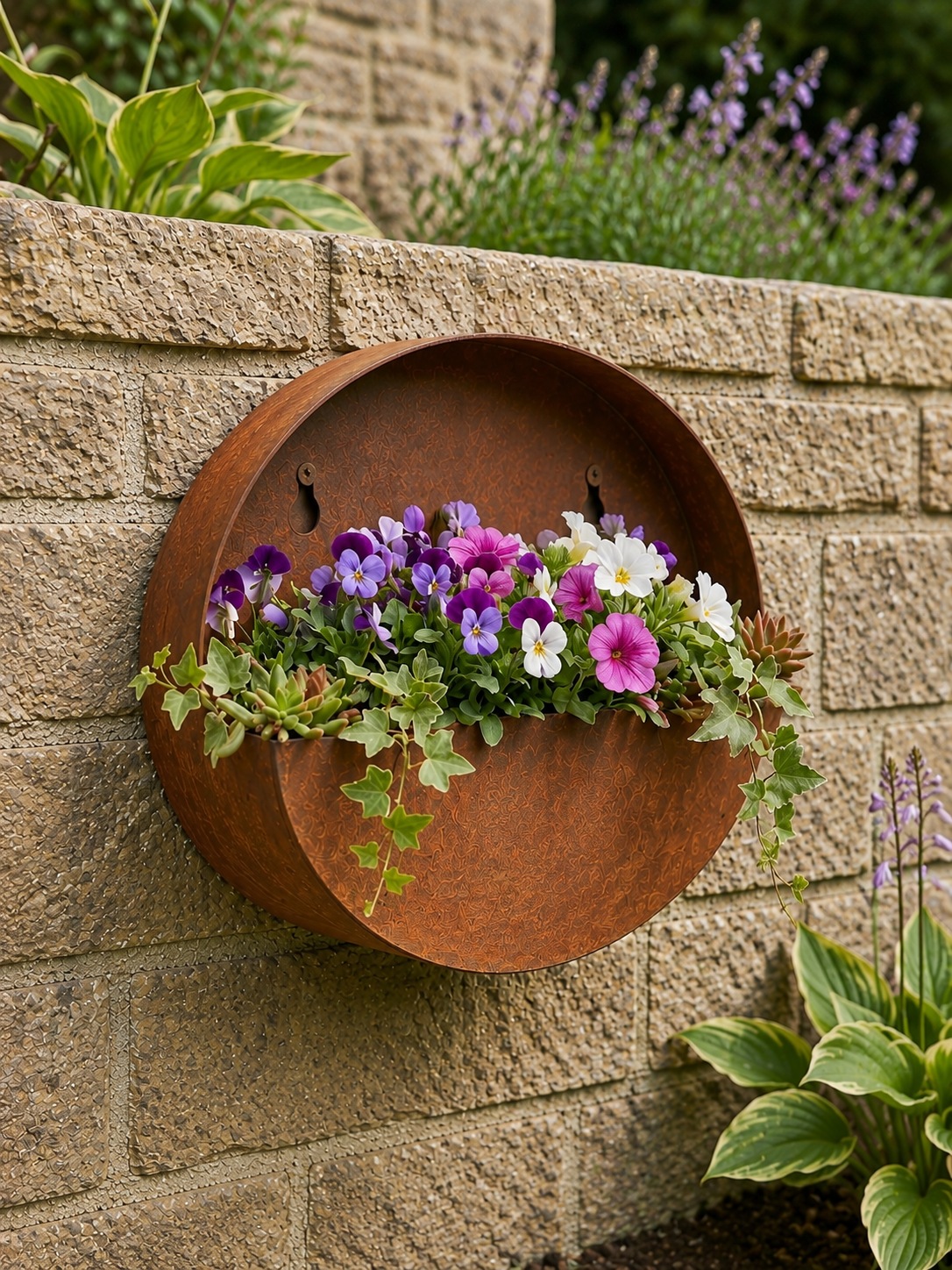
Corten, powder-coated or galvanized steel for garden art? Compare lifespan, rust behavior and upkeep, and pick the right finish for your US climate.
Corten vs Powder-Coated vs Galvanized Steel for Outdoor Garden Art
By Prestamp Engineers | Updated October 22, 2026
Corten steel garden art is the right pick if you want a rust finish that settles down and stays put. Powder-coated metal garden decor is the right pick if you want color and a clean edge, as long as you remember you're really buying a coating. Galvanized steel sits between them: zinc-protected, quietly gray and tougher than most buyers expect. Which one lasts longest depends less on the metal than on your climate and where the piece sits.
We make metal garden products, and this is what we tell buyers who ask which finish to specify. It covers how each one behaves outdoors, what actually kills them, and how to match a finish to a US climate and a product type. If you're sourcing for a store or a landscape project, the checklist near the end is for you.
Corten, powder-coated and galvanized steel at a glance
|
|
Corten (weathering steel) |
Powder-coated steel |
Hot-dip galvanized steel |
|
What protects the steel |
A rust layer that tightens up over time |
A baked polymer film |
A zinc layer bonded to the steel |
|
Look |
Orange to deep brown, matte, changes over time |
Any color, gloss or matte, stays uniform |
Silver-gray, dulls to matte gray |
|
Rust behavior |
Rusts on purpose, then slows down |
Doesn't rust until the film is breached, then rusts from the damage outward |
Zinc corrodes first, so the steel stays protected until the zinc is used up |
|
Typical outdoor life |
Decades in the right climate, much shorter in salt air or constant wet |
The coating is commonly quoted at 10 to 20 years; the steel beneath is only as good as the film |
Decades inland; depends heavily on zinc thickness and environment |
|
Maintenance |
Almost none; manage runoff and drainage |
Wash it, touch up chips early |
Almost none; watch for white rust early on |
|
Biggest weak spot |
Chlorides (coastal, de-icing salt) and standing water |
Chips, scratches and cut edges |
Thin zinc on sheet-metal products |
|
Best for |
Sculptures, planters, trellises, edging |
Stakes, obelisks, wind spinners, colorful decor |
Planters, raised beds, tubs, fencing, structural pieces |
Every row in that table has an asterisk, and most of them come down to environment and thickness.
How the three finishes actually work
Think of them as three different bets. Corten bets that a controlled rust layer can protect the steel underneath. Powder coating bets that a sealed film can keep water and oxygen away from the steel entirely. Galvanizing bets that a sacrificial metal, zinc, will take the corrosion instead.
None of them makes steel immune. That's why a corten planter can last for decades in Colorado and look tired in a few years on a Florida lanai, and why a powder-coated stake can look new for ten years and then fail in one season after a mower clips it.
Corten steel garden art: what you're actually buying
"Corten" started as a US Steel trade name for weathering steel, and people now use it for the whole category. The common specifications are ASTM A242, the original grade, ASTM A588, a later grade, and ASTM A606 for thin sheet. Thin sheet matters here because most garden pieces are cut from it. The alloy contains small amounts of elements such as copper and chromium, and those are what let the rust form a dense, adherent layer instead of flaking away like ordinary rust.
The process goes like this. Bare steel gets wet, dries, gets wet again. Over time the surface forms a rust layer that is tight and stable enough to slow further corrosion. Wet-dry cycling is the key requirement. A piece that dries out between rains builds a good layer. A piece that never dries doesn't.
How long does it take? The first orange bloom can show up fast, especially in humid places. Industry sources describe the fully stable protective layer as taking several years, with rural, drier locations weathering more slowly than urban, more humid ones. Expect the color to keep deepening for a good while after you install it, and tell your customers that so they don't panic in month two when the piece looks bright orange.
Corten has a real following for garden work and we understand why. It looks like it belongs outdoors. It sits well with stone, grasses and gravel. And a corten steel garden sculpture or a large corten planter needs no repainting, ever.
Rusty metal garden art is not always corten
This is the mix-up we see most often, and it costs buyers money.
A lot of "rusty metal garden art" on the market is plain mild steel that has been rusted on purpose, sometimes with acid, sometimes just by leaving it outside. It looks the same on day one. It doesn't behave the same. Mild steel rust keeps flaking and keeps eating into the metal. Weathering steel rust is supposed to bond and slow down.
How can you tell? Ask for the material grade and the mill certificate. A supplier who sells corten art should be able to give you A242, A588 or A606 on paper. If the answer is "it's rusty steel, it's the same thing," it isn't. Thin cut-out pieces like rusty garden ornaments and flat sun or leaf stakes are the products where this shortcut is most common, because nobody checks.
Does corten steel rust through?
Yes, it can. The marketing line that corten "stops rusting" is wrong, and it's worth saying plainly.
What corten does is slow the rate. Under the right conditions the protective layer cuts corrosion dramatically compared with ordinary steel, which is why weathering steel is used on bridges and building facades. KTA cites a 120-year design life with nominal maintenance for well-detailed bridges in suitable environments. Those are heavy sections, in the right climate, designed to shed water.
Garden art is different on three counts.
Thickness. A bridge girder has centimeters of steel to spare. A planter wall or a cut-out sculpture might be 2 to 3 mm. Even a slow corrosion rate eats a thin piece faster in relative terms, and there's far less margin before you see a hole.
Chlorides. Weathering steel doesn't perform well with heavy chloride exposure. That means coastal salt air, sea spray and de-icing salt that gets splashed onto pieces near roads or driveways. In those places the protective layer may not form properly, and corrosion keeps going.
Constant wetness. If a surface stays damp all the time, it doesn't get the dry phase the patina needs, and the corrosion rate stays higher. Humid subtropical climates can also keep the layer from stabilizing. KTA notes that a weathering-steel arena in Atlanta, the Omni Coliseum, was demolished about 25 years after it was built, partly because of humidity-driven rusting.
Planters are where rust-through happens most. The inside wall sits against wet soil for months. Water pools at the base if the drainage is poor. The outside may be perfectly dry and look fine while the inside is quietly thinning. Our advice for corten planters is simple:
- Choose heavier gauge for planters than for decor. Thin sheet is fine for a sculpture that stays dry. It isn't a good bet for a soil-filled planter.
- Raise the planter on feet so air can get under it.
- Make sure the drainage holes are real, and keep them clear.
- Use a well-draining soil mix. Pure compost holds water against the wall.
- Don't put it in a spot that stays wet, like under a downspout.
Do all that and a corten planter should give you many years. Skip it and expect a complaint in a review.
Rust stains and how to stop them
Fresh corten sheds rust particles in the rain. They stain pale concrete, limestone, light decking and white siding, and they're hard to get out. It's mostly an early-life problem, though early can stretch past the first year.
The fixes are boring and they work. Set pieces on gravel, soil or stone you don't mind staining. Use feet or risers so water doesn't sit between the steel and the surface. On a patio, put a drip tray or liner under planters. And don't seal corten to stop the staining without talking to the supplier first, because sealing and painting interfere with the weathering process.
Powder-coated metal garden decor
Powder coating isn't paint. It's a dry polymer powder that's sprayed onto the metal with an electrostatic charge and then baked, so it melts and cures into a continuous film. It's harder than most liquid paint and it covers edges well when it's done right. For powder coated metal garden decor, that film is the product. The steel is just the structure underneath.
Three things decide how good the result is.
Pretreatment. The steel has to be cleaned and chemically treated before coating, typically with a phosphate conversion layer or similar. The coating sticks to that layer. Skip it or rush it and the powder can peel in sheets within a season or two. When powder coating "flakes off," poor pretreatment is the first thing to check.
Chemistry. Outdoor products need a powder formulated for UV exposure. Polyester-based powders are the common choice for exterior work because they resist chalking and fading better than epoxy powders, which are fine indoors but chalk in sunlight.
Thickness and coverage. A typical powder coat film is in the range of 2 to 4 mils. Thin spots at sharp edges and in welded joints are where failures start, because the powder pulls away from sharp corners as it melts.
How long does powder coating last outdoors?
You'll see 10 to 20 years quoted commonly, and it's a reasonable range for a well-done job. The honest answer is that it depends, and the factors are specific.
- Sun. Intense UV, especially in the desert Southwest, fades colors and eventually chalks even good polyester powders. Dark colors and reds fade the most.
- Pretreatment quality. Covered above. This is the single biggest variable.
- Damage. A powder-coated surface that's never hit or scratched lasts much longer. One chip that exposes bare steel lets moisture creep underneath, and the coating lifts around it. Edges, corners, base plates and ground stakes take the abuse.
- Salt and moisture. Coastal air and constant dampness stress the film and find any weakness.
- The steel underneath. If the base metal is plain steel, any breach rusts. If it's galvanized steel, the zinc buys a lot of extra time. More on that below.
So when someone asks "how long does powder coating last outdoors," the best answer is: the film often outlives its looks, and the product fails where the film gets damaged. A powder-coated trellis in a calm backyard can look good for a decade or more. The same finish on a ground stake that gets knocked every week might not.
Touch up chips early. A small bottle of matching paint takes ten minutes and can add years.
Galvanized steel garden products
Galvanizing coats steel in zinc. Zinc does two jobs. It's a barrier, and it also corrodes in preference to the steel, so a scratch in the coating doesn't immediately start a rust problem. That sacrificial behavior is why galvanized planters, buckets and fencing hold up so well.
The detail that matters is how the zinc gets there, because the two common methods are very different products.
Hot-dip galvanizing, where fabricated steel is dipped into molten zinc, builds a thick coating. The American Galvanizers Association notes that most galvanized structural steel carries at least 3.9 to 5 mils of zinc, which is roughly 99 to 127 microns. For pieces made from heavier steel and finished after fabrication, the coverage of welds and edges is also good, because the whole part goes into the bath.
Pre-galvanized sheet, where the zinc is applied at the mill and the sheet is cut and formed afterward, carries a much thinner coating, roughly a mil or less per side. Cut edges and welds are bare. Plenty of cheap galvanized planters and "galvanized steel garden art" are made this way.
The AGA reports that atmospheric corrosion rates for galvanized steel rarely exceed 0.3 mils per year, which works out to about 7.6 microns. Here's the arithmetic. At that worst-case rate, a 3.9-mil coating lasts about 13 years before the zinc is used up. Most outdoor environments run well below that rate, so real-world life is longer, and thicker coatings last proportionally longer. A coating around a mil thick would be gone in a few years at that rate. That's why the thickness question matters more than the word "galvanized."
Galvanized steel does have a quirk. Fresh zinc can form a white, powdery layer, called white rust, when it stays wet and doesn't get air. It's cosmetic in most cases and usually fades as the surface weathers. It's worth knowing about so a new planter doesn't get returned for it.
Galvanized vs powder coated steel: which wins?
Neither, for the same reason you don't ask whether a raincoat beats a jacket. They do different jobs.
Galvanizing is better when the piece is going to live in contact with soil and water, like planters, raised beds, tubs and edging, or when it's going to be structural, like a heavy trellis or gate. The protection is built into the metal surface and it doesn't depend on nobody hitting it.
Powder coating is better when appearance matters: colors, finishes, crisp lines, anything decorative where a gray zinc surface looks wrong. It's also the right choice for pieces that are lifted, hung or displayed away from the ground.
The real answer is often both. A duplex system applies a powder coat or paint over hot-dip galvanized steel. The AGA says the combination lasts 1.5 to 2.3 times longer than the sum of the two systems used separately, because the coating shields the zinc from the air and the zinc stops rust creeping under the film if it's scratched. It requires proper surface preparation, and the AGA calls that the most important part of the job. The galvanized surface has to be cleaned and profiled correctly before coating, and everyone in the chain, the fabricator, the galvanizer and the coater, has to know the piece is being duplexed.
If you're selling colorful garden products into a coastal or high-humidity US market, this is the specification we'd look at first.
Choosing by US climate
- Pacific Northwest and other rainy regions. Constant moisture is the enemy. Galvanized or duplex wins. Corten works in open, airy spots and struggles in shaded, permanently damp ones.
- Southeast, Gulf Coast and Florida. Humidity and salt air are rough on all three. Hot-dip galvanized with a powder coat on top is the safest bet. If you want a rust look here, a rust-toned powder coat over galvanized steel is a practical workaround.
- Desert Southwest. Dry air suits corten, since the wet-dry cycle works. UV is the problem for powder coating, which fades faster in strong sun.
- Mountain West and Plains. Corten is at its best, with real dry spells between weather. Watch for de-icing salt near driveways.
- Northeast and Midwest. Road salt is the variable. Keep corten away from plowed edges. Galvanized and powder-coated pieces do fine with a spring rinse.
- Coastal anywhere. Treat salt air as the dominant factor: heavier zinc, duplex coatings, or stainless steel for the most exposed pieces. We wouldn't make corten the default within a few hundred feet of open water.
Choosing by product type
- Garden stakes and flat cut-out art. These are thin, so protection matters. Powder-coated or hot-dip galvanized after cutting. If you want a rust look, confirm it's true weathering steel.
- Sculptures and focal pieces. Corten works well, since they usually sit in open, drained spots and nobody is packing soil against them.
- Obelisks and trellises. Powder-coated steel is the usual choice for color; go duplex for coastal or wet sites. We cover sizes and anchoring in our trellis buying guide.
- Planters. Heavier-gauge corten or hot-dip galvanized, because soil contact is the whole problem. See our corten steel planters and galvanized planters.
- Raised beds. Galvanized or zinc-alloy coated steel is standard. We go deeper in our metal raised bed guide.
Caring for each finish
Corten needs drainage and dry spells, and nothing else. Powder coating needs a wash with mild soap once or twice a year and early touch-ups on chips. Galvanized steel mostly needs to be left alone and kept out of standing water; light white rust fades by itself.
What to ask a supplier before you order
If you're buying for resale or a project, these questions separate good makers from the rest. Ask us all of them too.
- Material grade and certificates. For corten, A242, A588 or A606 and a mill certificate. For galvanizing, the coating standard and thickness.
- Was galvanizing done before or after fabrication? After is better for edges and welds.
- Pretreatment steps and powder chemistry. Exterior work should use a UV-stable polyester.
- Film thickness and how it's measured.
- Salt spray or other test data, including hours tested.
- Steel gauge for each product, in mm and inches.
For wholesale and OEM orders, including minimum quantities and lead times, request a quote. You can also browse our full metal garden products range.
Frequently Asked Questions (FAQs)
1. Is corten steel garden art safe for the long term outdoors?
In most inland US climates, yes, as long as it can dry between rains. Near the coast, in constant shade and damp, or around de-icing salt, it can corrode much faster and may not form a stable layer.
2. Does corten steel rust through?
It can. The protective layer slows corrosion but doesn't stop it. Thin sheet, standing water, soil contact and chlorides are the usual causes, which is why planters are the most common failures.
3. How long does powder coating last outdoors?
Commonly 10 to 20 years for a well-applied exterior polyester coating, though sun, pretreatment, damage and salt air all move that number. Chips that expose bare steel are the main way it fails early.
4. What's the difference between galvanized vs powder coated steel?
Galvanizing is a zinc layer that protects steel even when scratched. Powder coating is a polymer film that gives color and a clean finish but needs to stay intact to protect. Used together, they can last 1.5 to 2.3 times longer than the two systems added up separately, according to the American Galvanizers Association.
5. Is rusty metal garden art the same as corten?
No. Corten is a specific weathering-steel alloy. Plenty of rusty garden art is mild steel that was rusted on purpose and will keep flaking and thinning. Ask for the grade and the mill certificate.
6. Which finish is best for coastal gardens?
Hot-dip galvanized steel with a powder coat on top, or stainless steel for the most exposed pieces. Corten is a poor default close to salt water.
7. Can you seal or paint corten steel to stop rust stains?
It’s better not to. Sealing or painting interferes with the weathering process, and a sealer that cracks can trap moisture against the steel. To protect your patio instead, set pieces on gravel, soil or stone, lift them on feet or risers, and put a drip tray or liner under planters.
8. How long does it take corten steel to develop its rust look?
The first orange bloom can appear within weeks to months, especially in humid climates. The fully stable protective layer takes several years, and drier, rural locations weather more slowly than humid or urban ones. The color keeps deepening during that time, so a bright orange piece in its first year is normal.
9. Does galvanized steel rust?
Eventually, yes, once the zinc coating is used up. The American Galvanizers Association says atmospheric zinc loss rarely exceeds 0.3 mils per year, so a thick hot-dip coating of 3.9 mils or more protects steel for many years. Thin pre-galvanized sheet has far less zinc, which is why the coating thickness matters more than the word “galvanized.”
10. How do you repair a chip in powder-coated garden decor?
Fix it early. Clean and dry the chipped spot, lightly sand any loose edges, and apply a matching touch-up paint rated for outdoor metal. A chip that exposes bare steel lets moisture creep under the coating, so a ten-minute repair now can prevent peeling later.
The short version
If you want one rule: match the finish to the water. Corten wants to dry out. Powder coating wants to stay unbroken. Galvanizing wants thickness. Pick the finish whose weakness your site doesn't have.
We make corten steel garden art, powder coated metal garden decor and galvanized garden products for retailers, landscapers and brands across the United States. Tell us where the product will sit and what the budget looks like, and we'll tell you honestly which finish we'd use.