Raised Garden Beds: A Complete Guide to Metal & Galvanized Steel Beds
October 13, 2026
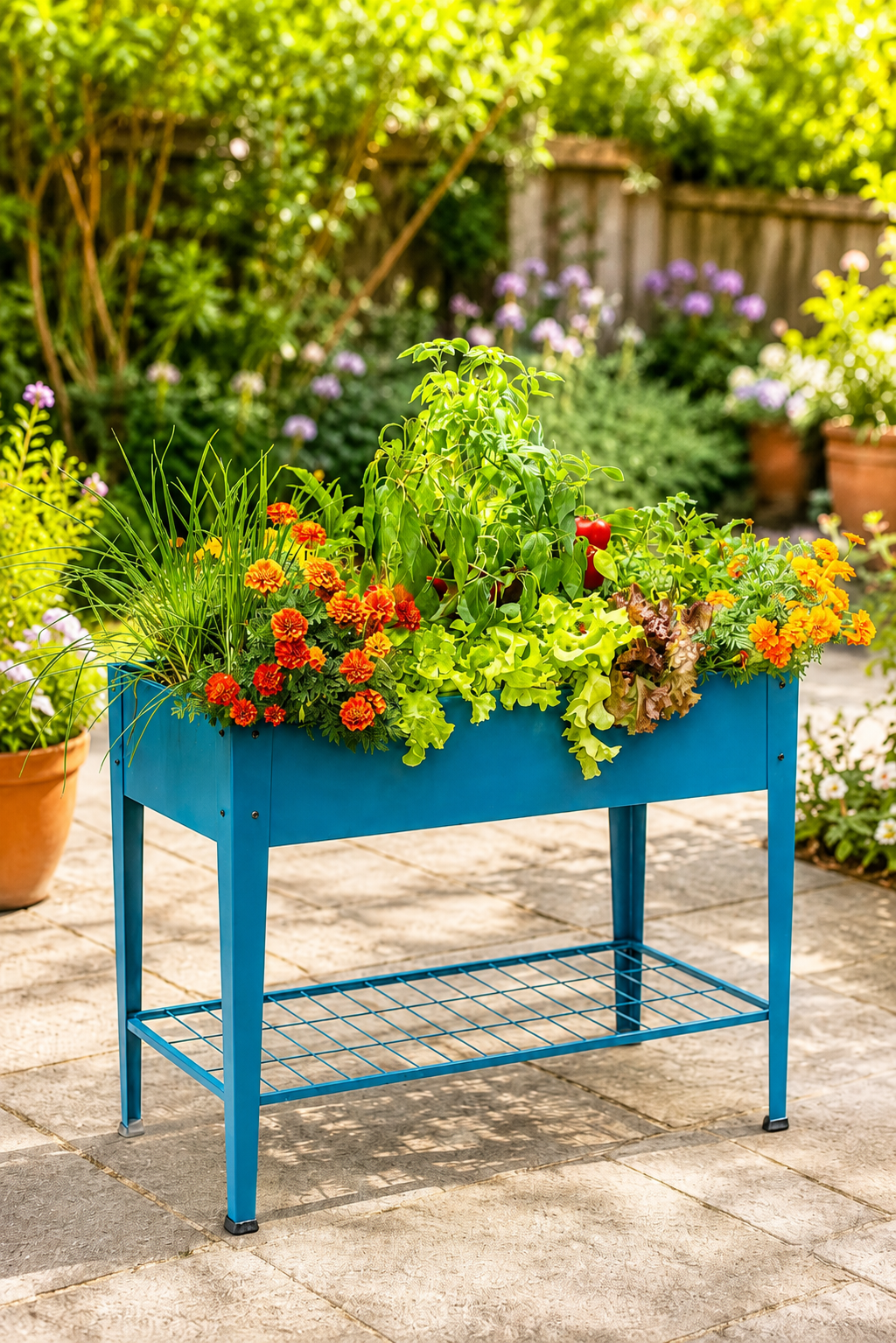
Learn how to choose raised garden beds, including metal, galvanized and steel options, with tips on size, soil, installation, maintenance and buying.
Raised Garden Beds: A Buyer's Guide to Metal, Galvanized Steel and Wood Beds
Updated :14 Oct 2026 · The Prestamp Engineers Team
If you only have a minute: for most gardens, a galvanized steel raised garden bed that is 4 feet wide and at least 11 to 12 inches tall is the safest all-round pick. It won't rot, it holds its shape, and it needs almost no upkeep. Cedar is the best-looking alternative if you like a natural look and don't mind replacing boards eventually. The rest of this guide covers size, depth, soil, installation and what to check before you spend money.
What is a raised garden bed, and why is everyone building one?
A raised garden bed is a bottomless (or lightly floored) frame that holds soil above the surrounding ground. You fill it with a soil mix you choose, so the quality of your native dirt stops mattering. That's the whole appeal. If your yard is clay, rocky, compacted or just tired, a raised bed lets you start fresh in a weekend.
The other reasons people switch are practical:
- Drainage. Water moves through loose, raised soil instead of pooling around roots.
- Fewer weeds. You fill the bed with clean soil, so there are fewer weed seeds to start with.
- Less bending. Taller beds are easier on backs and knees, which is why elevated garden beds are popular with older gardeners and in schools.
- An earlier start. Raised soil warms faster in spring, so you can usually plant a little sooner.
- A tidy layout. Defined edges make a vegetable garden easier to plan, water and walk around.
Two questions come up more than any others: "what's the best material?" and "how deep does it need to be?" We answer both below, along with soil, size, covers and winter care.
What is the best material for raised garden beds?
For most people, galvanized or powder-coated steel is the best material because it doesn't rot, warp or attract termites, and it lasts far longer than untreated softwood. Cedar is the best wood option. Plastic is the cheapest and the shortest-lived.
Here is how the common choices compare:
|
Material |
Typical lifespan |
Upkeep |
Look |
Best for |
|
Galvanized steel |
Many years; depends on coating and climate |
Very low |
Clean, modern |
Vegetable gardens, all-purpose use |
|
Powder-coated steel |
Many years; coating protects the finish |
Very low |
Colors and textures |
Front yards, hotels, retail displays |
|
Corten (weathering) steel |
Long; forms its own rust layer |
Very low |
Rustic orange-brown |
Contemporary landscapes, public spaces |
|
Cedar |
Often a decade or more |
Low to moderate |
Natural, warm |
Traditional gardens |
|
Other softwood (pine, fir) |
A few seasons, longer if treated |
Moderate to high |
Natural |
Tight budgets, short-term beds |
|
Plastic or composite |
Varies widely |
Low |
Basic |
Temporary and small beds |
|
Concrete block |
Very long |
Low |
Heavy, industrial |
Permanent builds |
Why metal raised garden beds keep gaining ground. Steel doesn't rot, so you aren't re-building the bed every few seasons. It doesn't swell and split with the weather, pests can't tunnel through it, and at the end of its life it's recyclable. Corrugated panels, which are one of the fastest-rising searches in this category, add rigidity without adding much weight.
Where cedar still wins. It looks natural, it's easy to cut to custom sizes, and it's naturally rot-resistant. If you're building a one-off DIY raised garden bed from lumber, cedar is a good choice. Just budget for lumber prices and expect to replace boards eventually.
What about pressure-treated wood? Modern pressure-treated lumber no longer uses the arsenic-based preservatives that gave it its reputation, but many gardeners still avoid it around edible crops. If you want wood, cedar or another naturally rot-resistant species keeps the question off the table.
Steel finish matters as much as steel type. Hot-dip galvanizing, pre-galvanized sheet, powder coating and corten (weathering) steel all behave differently outdoors. If a coastal climate or road salt is part of your situation, ask the seller which finish the bed uses and how thick the coating is. If you like the rust-toned look, browse our corten steel raised beds and planters.
Are galvanized raised garden beds safe for vegetables?
Yes, for most gardeners. Galvanized steel is coated in zinc, and zinc is also an essential nutrient for plants and people. The amount that moves from a quality galvanized panel into the soil is small under normal conditions, and it's the same material used for stock tanks and roofing.
Two habits keep it that way:
- Keep your soil pH near neutral. Zinc dissolves more readily in strongly acidic soil. A mix of topsoil and compost usually sits in a comfortable range, and a cheap soil test will tell you for sure.
- Buy from a seller that can tell you what the coating is. Look for galvanized or powder-coated steel made for outdoor use, and be wary of unmarked panels with no stated finish.
If you're growing for a household with specific health concerns, your local cooperative extension office can advise on soil testing for your area.
Do metal raised garden beds get too hot?
The panel itself can feel warm on a sunny afternoon, but the soil inside is a big thermal mass, and the difference at root depth is usually modest. In hot climates, a layer of mulch and a steady watering routine make far more difference than the bed material. If you garden in a very hot region, choose a lighter finish and plant heat-sensitive crops toward the center of the bed.
What is the best size for a raised garden bed?
The best all-round size is 4 feet wide by 8 feet long. At 4 feet wide you can reach the center from either side without stepping in and compacting the soil, and 8 feet gives you plenty of room for a family vegetable garden.
|
Size |
Best for |
Notes |
|
2’ x 4’ |
Herbs, salad greens, small patios |
Easy to move and fill |
|
4’ x 4’ |
A first kitchen garden |
Good for beginners; roughly 16 square feet |
|
3’ x 6’ |
Mixed vegetables |
A good fit for narrow side yards |
|
4’ x 8’ |
Family vegetable garden |
The most common size, so soil and cover accessories are easy to find |
|
Custom |
Commercial, school and OEM projects |
Specify exact length and height to match your layout |
A few rules of thumb:
- Width matters most. Stay at 4 feet or less. If one side sits against a fence or wall, drop to 2 or 3 feet, because you can only reach from one side.
- Leave paths. Plan at least 2 to 3 feet between beds so you can get a wheelbarrow through.
- Start with one. A single well-tended 4' x 8' bed will out-produce three neglected ones. You can always add more later, and modular steel beds make that easy.
How deep should a raised garden bed be?
Aim for 11 to 12 inches of soil depth for most vegetables, and go to 17 or 18 inches or more if you grow root crops, tomatoes or you simply want less bending. Shallow beds of 6 to 8 inches are fine for lettuce, spinach and herbs.
One caveat: if your bed sits on open ground and you loosen the soil underneath, roots can reach below the frame. On concrete, a deck or a patio, the frame height is the soil depth, so build taller.
|
Crop |
Soil depth that works |
|
Lettuce, spinach, radishes |
6 to 8 inches |
|
Herbs |
8 to 10 inches |
|
Peppers, bush beans, cucumbers |
12 inches |
|
Carrots, onions |
12 to 18 inches |
|
Tomatoes |
18 inches or more |
|
Potatoes |
12 to 18 inches, deeper for hill-style growing |
Why tall raised garden beds are catching on
Tall raised beds, at 24 to 36 inches, are one of the fastest-growing searches in this space, and the reason is comfort. You can tend them standing or from a stool, and they're the practical choice for gardeners with limited mobility. Elevated garden beds on legs or frames bring the planting surface up to waist height and are common in school gardens, assisted-living facilities and accessible gardens. They also use a lot of soil, so check the weight before you buy (more on that in the soil section).
What is the best soil for raised garden beds?
A good starting mix is roughly 60% quality topsoil, 30% compost and 10% aeration material such as perlite, coarse sand or pumice. That gives you drainage and water retention at the same time, plus the organic matter plants feed on. If you want a lighter, fluffier option, many gardeners use equal parts compost, coco coir or peat, and vermiculite.
Some notes on filling a raised bed:
- Don't fill with garden dirt alone. It compacts inside a raised frame and drains poorly.
- Use a mix of compost sources. Blending two or three types of compost adds more variety of nutrients than one. If you make your own, a garden composter turns kitchen scraps and fall leaves into free compost.
- Bags are fine for small beds, bulk is cheaper for big ones. For a large bed, ordering bulk soil delivered is usually far cheaper than bags.
- Top up every year. The soil settles and plants use it up, so add an inch or two of compost each spring.
- Filling a tall bed? You don't need to buy all the soil. Logs, branches and leaves in the bottom third break down over time and save money, though the level will sink as they decompose.
How much soil do you need?
Multiply length x width x depth, all in feet, then divide by 27 to get cubic yards.
Length x width x depth (in feet) / 27 = cubic yards.
A 4' x 8' bed filled 12 inches deep needs 32 cubic feet, or about 1.2 cubic yards. At 18 inches deep it needs 48 cubic feet, or about 1.8 cubic yards. Filled soil is heavy, easily over a ton per cubic yard when wet, so for patios and rooftops confirm your surface can carry the load.
How do you build and install a raised garden bed?
Most steel raised bed kits go together in under an hour with a screwdriver or a drill, and the process is the same whether you're building on grass, gravel or a patio. If you're searching for how to build a raised garden bed from scratch with lumber, the same site-prep steps apply.
- Pick a level, sunny spot. Most vegetables want six to eight hours of direct sun. Check the spot at different times of day before you commit.
- Prep the ground. Clear grass, weeds and stones. On lawn, lay flattened cardboard under the bed to smother what's below, and it will break down over the season.
- Assemble the panels. Connect the side panels and corners with the supplied hardware and tighten evenly. Check the frame is square by measuring both diagonals.
- Level the frame. Dig out high spots rather than packing soil under low spots. A bed that rocks will shift once it's full.
- Add protection if needed. If gophers, moles or voles live nearby, line the bottom with hardware cloth before you fill. It's cheap insurance, and it works.
- Fill and plant. Add your soil mix, leaving an inch or two below the rim so water doesn't spill. Water well, let it settle, then plant.
- Mulch. A couple of inches of straw or shredded leaves cuts evaporation and weeds.
Do raised garden beds need a bottom?
Not when they sit on bare ground. An open bottom lets roots and earthworms reach the native soil and keeps drainage simple.
Can you put a raised garden bed on concrete, a patio or a deck?
Yes, with a few adjustments. Use a bed with drainage openings or an elevated planter with a base, keep it 1 to 2 inches off the surface if you can so water escapes, and build it tall enough to hold the full root depth, since roots can't go below the frame. Weigh your total load first: the bed, wet soil and plants are heavy, and decks and rooftops have limits. Putting a tray or protective layer under the bed will help protect the surface from rust stains and moisture.
Covered raised garden beds and how to winterize a raised bed
A covered raised garden bed is a frame topped with hoops, a mini greenhouse cover, row fabric or a hinged lid. It protects seedlings from frost, keeps pests off, and extends your season by weeks at both ends. A cover is the easiest upgrade you can make to an existing bed, and it's one of the fastest-growing things gardeners are searching for right now.
What a cover can do for you:
- Shield young plants from late spring frosts and early fall frosts
- Keep birds, rabbits and insects off leafy crops
- Hold in warmth for cool-season crops through winter in mild climates
- Reduce wind damage and heavy-rain splash
If you're after a greenhouse raised bed, look for hoop supports that fit your bed's dimensions, and vent the cover on sunny days so plants don't overheat.
How to winterize raised garden beds
Steel beds can stay put all winter, because freezing and thawing won't crack, rot or warp them. What needs attention is the soil, and our full guide to winterizing raised garden beds covers each step, plus which cover crops to plant, in more detail:
- Clear spent plants. Pull diseased plants and leave healthy roots in the soil to rot in place.
- Feed the soil. Spread 1 to 2 inches of compost on top.
- Protect it. Cover with mulch, straw, shredded leaves or a tarp. Bare soil erodes and loses nutrients over winter.
- Plant a cover crop. Winter rye, crimson clover or hairy vetch hold the soil, suppress weeds and add nitrogen or organic matter when you turn them under in spring. Fall is the time to sow them.
- Check the hardware. Look over fasteners and corners before the snow arrives, and clear drainage openings of debris.
- Keep a few hardy crops going. Garlic, kale and spinach can take a hoop cover through a cold stretch.
Raised beds vs. in-ground gardens vs. planter boxes
Raised beds give you the most control over soil and drainage for the least ongoing work, while in-ground gardens cost the least to start and planter boxes suit small spaces.
|
|
Raised garden bed |
Planter box |
In-ground garden |
|
Soil control |
Excellent |
Excellent |
Limited by your native soil |
|
Drainage |
Excellent |
Good |
Depends on your ground |
|
Upkeep |
Low |
Moderate (watering) |
Higher (weeding, tilling) |
|
Easy on the back |
Yes, more so when tall |
Yes |
No |
|
Growing capacity |
High |
Moderate |
High |
|
Startup cost |
Moderate |
Low to moderate |
Lowest |
If you're deciding between raised beds and an in-ground garden, the deciding factors are usually soil quality and your back. Poor or contaminated soil, heavy clay, or physical limits point to raised beds. Rich, loose native soil and lots of space point to in-ground.
Raised garden bed ideas for every space
The right layout depends on where it's going. A few that work well:
- Vegetable and kitchen gardens. Two or three 4' x 8' beds with paths between them is the classic layout. Put tomatoes and trellised crops on the north side so they don't shade shorter plants. Not sure whether to use cages or a trellis? Our tomato cages vs. trellis guide helps you choose.
- Raised flower beds and pollinator gardens. Curved or tiered beds along a fence line or walkway add color and bring in bees and butterflies. An arch or arbour at the entrance makes a natural focal point.
- Patio and balcony gardens. Elevated beds or narrow 2' x 4' planters give you herbs and salad greens a few steps from the kitchen. Add a metal plant stand for extra pots, and see our plant stand buying guide for sizes and materials.
- Kids' and school gardens. Lower beds with rolled or capped edges, bright powder-coated colors and small plots children can reach all the way across.
- Accessible gardens. Tall or elevated beds at 24 to 36 inches, with enough clearance underneath for a wheelchair or a stool.
- Rooftop and community gardens. Modular steel beds that link together into larger layouts and can be moved or reconfigured.
- Hotels, restaurants and public spaces. Corten or powder-coated steel planters with consistent dimensions and finishes, often custom-made to match the site. See our corten steel planters and manufacturing capabilities.
Cheap raised garden beds vs. the best raised garden beds: what to check before you buy
A low price is fine if you know what you're giving up. These are the points that separate a bed that lasts from one you'll replace:
- Steel thickness. Thicker panels resist bowing under the weight of wet soil. Gauge numbers run backwards (a lower gauge is thicker), so ask for the thickness in millimeters or inches as well.
- The finish. Galvanized, powder-coated and corten all perform differently. Ask what the coating is and where it's applied.
- Corners and reinforcement. Corners and top edges take the most stress. Look for solid corner brackets, a rolled or capped top edge (it's also easier on hands) and bracing on longer beds.
- Edge safety. Raw cut edges on cheap panels can be sharp. Rolled or folded edges are safer for kids and gloves.
- Fasteners. Stainless or coated bolts last longer than bare ones.
- Assembly. Clear instructions and all hardware in the box save time.
- Warranty and return policy. A seller who stands behind the product usually knows what's in it.
Where to buy. Home improvement stores and big online marketplaces carry the widest range. Local nurseries and garden centers are worth a look if you want something you can see first. If you search for raised garden beds near me and want a specific size or finish, buying direct from a manufacturer is often the way to get it. You can browse our products or ask us about custom sizes.
Keeping a metal raised bed in good shape
Steel beds need very little, but a few habits go a long way:
- Clear leaves and debris from drainage openings and around the base.
- Check fasteners once a year and snug up any that have loosened.
- Don't drag shovels or hoes along powder-coated panels. Scratches let moisture in.
- Top up the soil with compost each spring.
- Inspect the bed after heavy rain to see how it's draining.
Common mistakes
- Buying on price alone
- Choosing a bed that's too shallow for the crops you want
- Ignoring drainage when building on concrete
- Making a bed wider than 4 feet, so you can't reach the middle
- Skipping the gopher barrier when you know there are gophers
- Using garden dirt instead of a proper soil mix
For retailers, landscapers and OEM buyers: what to look for in a raised bed manufacturer
If you're sourcing metal raised garden beds for resale, a private-label line or a commercial project, the manufacturer matters as much as the product. Here's what to ask any supplier:
- Which steel grade and thickness do they use, and can they show it?
- Which finishes do they offer (hot-dip galvanized, pre-galvanized, powder-coated, corten), and how are they applied and tested?
- Do they cut, form, weld and coat in-house, or outsource key steps?
- Can they hold consistent dimensions across a large order?
- What do they do for export packaging, so beds arrive flat, unscratched and easy to count?
- Do they offer custom sizes, colors, branding and private-label packaging?
- What are their lead times and monthly capacity, and how do they handle repeat orders?
About Prestamp Engineers
Prestamp Engineers manufactures metal garden products for customers across North America. Our in-house tool room, laser cutting, brake press forming, spot welding, metal fabrication and powder coating let us manage quality from flat sheet to finished bed. You can see the full list on our capabilities page. We build raised garden beds, elevated planters and custom steel planters, including OEM and private-label programs for distributors, retailers and landscape projects.
If you're planning a raised bed line or a commercial planting project, contact our team with your sizes, finishes and quantities and we'll come back with options and a quote. Have a quick question first? Check our FAQs.
Frequently asked questions about raised garden beds
1. What is the best material for raised garden beds?
Galvanized or powder-coated steel is the best all-round choice because it won't rot, warp or attract pests, and it needs almost no maintenance. Cedar is the best wood option for a natural look. Plastic is cheapest but usually wears out fastest.
2. Are metal raised garden beds better than wood?
For durability and upkeep, usually yes. Steel doesn't rot or swell, and it holds its shape under the weight of wet soil. Wood is easier to cut for custom builds and looks more traditional, but it typically needs replacing sooner.
3. Are galvanized raised garden beds safe for vegetables?
For most gardeners, yes. Galvanized steel is coated in zinc, which is a plant nutrient, and the amount that reaches the soil is small. Keep your soil pH near neutral, buy from a seller who can name the coating, and test your soil if you have concerns.
4. How deep should a raised garden bed be?
Eleven to 12 inches works for most vegetables. Use 17 to 18 inches or more for tomatoes, carrots and potatoes, and 6 to 8 inches is enough for lettuce and herbs. On concrete or decking, build taller because roots can't grow below the frame.
5. What is the best size for a raised garden bed?
A 4-foot by 8-foot bed is the most popular. Four feet is wide enough to maximize growing space and narrow enough to reach the middle from either side. Choose 2 x 4 feet for patios, and 3 x 6 feet for tighter side yards.
6. What should I fill a raised garden bed with?
About 60% topsoil, 30% compost and 10% perlite, coarse sand or pumice is a reliable mix. Avoid using plain garden dirt on its own, because it compacts in a raised frame. Add an inch or two of compost every spring.
7. Do raised garden beds need a bottom?
Not if they sit on natural ground. An open bottom lets roots and earthworms reach the soil beneath and helps drainage. If you're on a deck, patio or rooftop, use a bed with a base and drainage openings.
8. Can I put a raised garden bed on concrete?
Yes. Make sure the bed has drainage, keep it slightly lifted so water can escape, build it deep enough for your crops, and check that the surface can carry the weight of wet soil.
9. How do I winterize a raised garden bed?
Steel beds can stay outside all winter. Clear spent plants, add compost, then cover the soil with mulch or plant a cover crop such as winter rye or crimson clover. A hoop cover also lets you keep hardy greens going.
10. How long do metal raised garden beds last?
It depends on the steel, the coating, your climate and how well you look after it. Quality galvanized and powder-coated beds are built to last many years outdoors, and they usually outlast untreated wood by a wide margin.